
Hit The DNS
Hit The DNS recon tool written in bash

Contents
Description
Hit-The-Dns is a modern DNS recon tool written in bash which will help you during the DNS recon similar to tools like subfinder or dnsenum.
Installation
wget https://raw.githubusercontent.com/juanbelin/Hit-The-Dns/refs/heads/main/hit-the-dns.shchmod +x hit-the-dns.shExample Usage
This example was done using Attacking DNS Lab from HTB Academy.
DNS Fuzzing
./hit-the-dns -d inlanefreight.htb -i 10.129.203.6 -w ~/seclists/Discovery/DNS/subdomains-top1million-110000.txtDNS Fuzzing verbose mode
-v or --verbose in order to view fuzzing attempts.
./hit-the-dns -d test.com -i 10.129.203.6 -w ~/seclists/Discovery/DNS/subdomains-top1million-110000.txt -vChecking dns.logs and following the next step
The dns.logs file will give you the next step in the recon (zone transfer attack) according with the subdmains that the tool has found during the fuzzing.
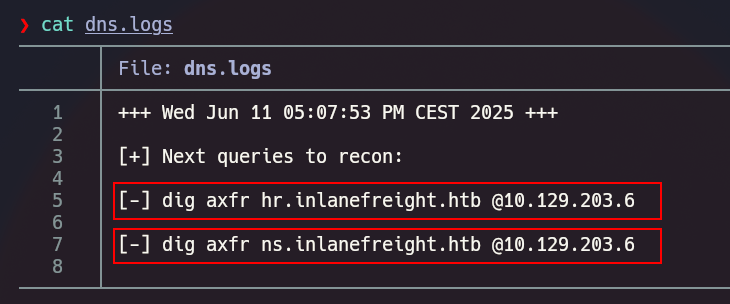
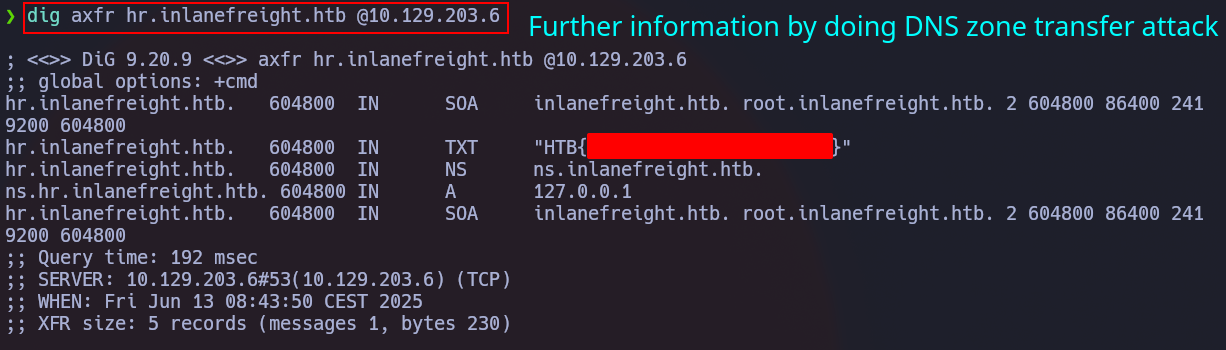
Usage
./hit-the-dns -d domain.com -i 10.10.2.15 -w /path/to/wordlist.txt <-v>./hit-the-dns.sh
█████ █████ ███ █████
░░███ ░░███ ░░░ ░░███
░███ ░███ ████ ███████
░███████████ ░░███ ░░░███░
░███░░░░░███ ░███ ░███
░███ ░███ ░███ ░███ ███
█████ █████ █████ ░░█████
░░░░░ ░░░░░ ░░░░░ ░░░░░
█████ █████ ██████████ ██████ █████ █████████
░░███ ░░███ ░░███░░░░███ ░░██████ ░░███ ███░░░░░███
███████ ░███████ ██████ ░███ ░░███ ░███░███ ░███ ░███ ░░░
░░░███░ ░███░░███ ███░░███ ░███ ░███ ░███░░███░███ ░░█████████
░███ ░███ ░███ ░███████ ░███ ░███ ░███ ░░██████ ░░░░░░░░███
░███ ███ ░███ ░███ ░███░░░ ░███ ███ ░███ ░░█████ ███ ░███
░░█████ ████ █████░░██████ ██████████ █████ ░░█████░░█████████
░░░░░ ░░░░ ░░░░░ ░░░░░░ ░░░░░░░░░░ ░░░░░ ░░░░░ ░░░░░░░░░
[+] Usage:
-d/--domain <domain> -w/--wordlist </path/to/wordlist> -i/--ip <IP>
-v/--verbose = Verbose mode
-h --> Show help panelDo not forget adding the domain to the
/etc/hostsfilenano /etc/hostsand add a new line which contains ‘10.10.2.1 domain.com’
Hit-The-Dns with Dnsenum comparation
Some tools such as dnsemun does not always find the subdomains even if they exist in the DNS because of the way it implements threads and filters.